Battery sizing · SEQ

Why bigger is better for home battery storage.

A 30 kW solar system can generate 120 kWh a day. A small battery wastes most of it. Here's the maths that changes the conversation.

Illustration of a Queensland home running on stored solar

When thinking about battery storage, most people imagine one big bucket of energy. But to truly maximise the return on your battery investment, it's better to think in sections — specific roles for specific slices of your storage.

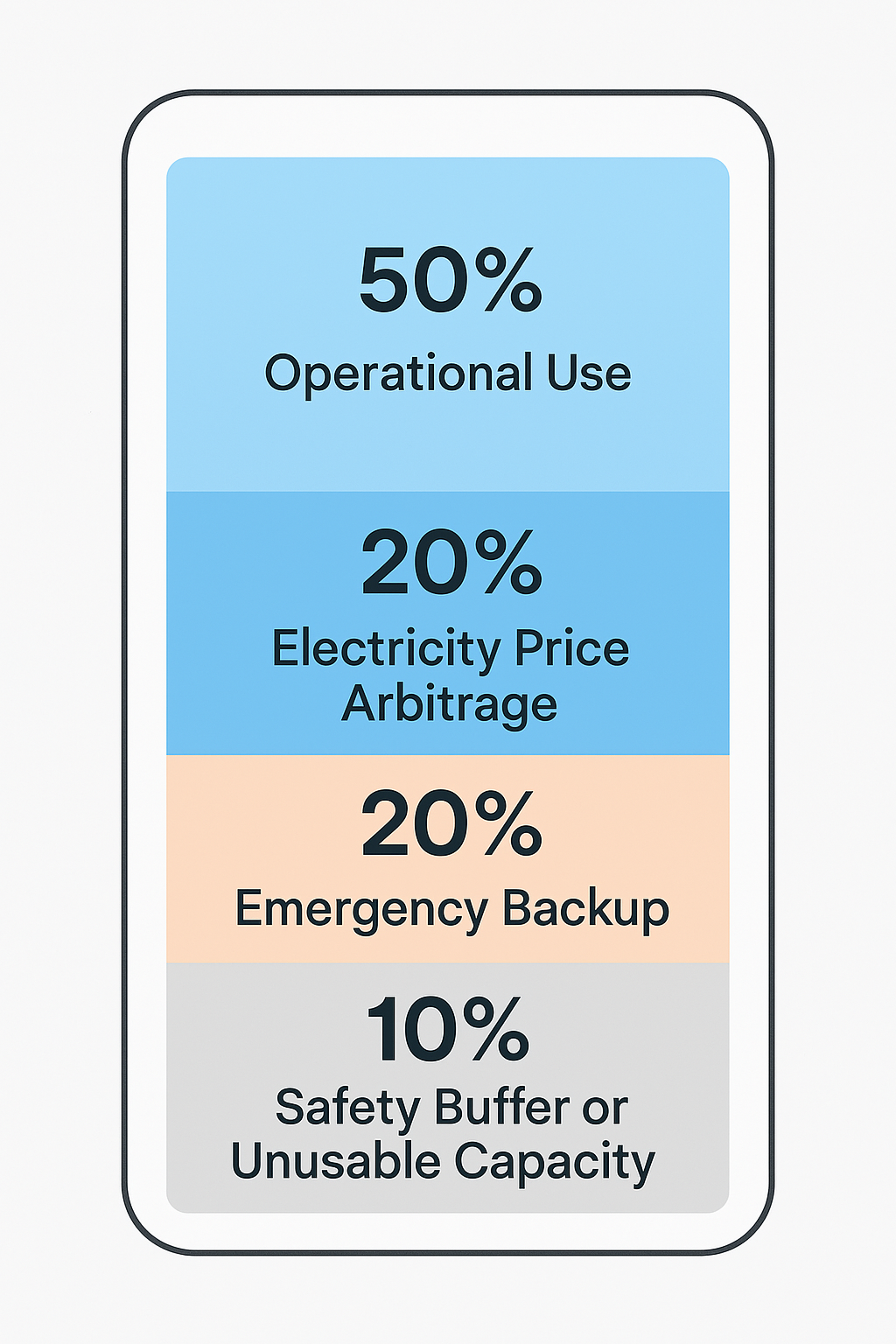
Battery storage breakdown: 50% operational use, 20% arbitrage, 20% emergency backup, 10% safety buffer

A large-capacity battery gives you the flexibility to divide its energy into meaningful roles:

  • Operational use (50%) — Your everyday storage. Solar energy captured during the day and used at night to power your home. The foundation of bill savings.
  • Electricity price arbitrage (20%) — Buy low, sell high. This slice capitalises on wholesale market spikes and time-of-use pricing. The bigger the slice, the bigger the potential profit.
  • Emergency backup (20%) — A reserve kept charged for blackouts, ready to run essential loads like fridges, lights and internet.
  • Safety buffer (10%) — Most batteries don't allow full use of their rated capacity, either to protect battery health or due to system design limits.

With a small battery, you're forced to choose between these roles — and often sacrifice one for the other. With a larger battery, you can confidently assign energy to all four functions and still have enough to respond to the grid or handle an outage.

Six reasons

Go large for home battery storage in SEQ.

If you're in South East Queensland already running a powerful solar system — say, 30 kW — it's time to think big on storage too.

01

Store more of your solar.

A 30 kW solar system can generate around 120 kWh/day in SEQ's sunshine. Most homes only use ~25 kWh/day. A single Powerwall fills up fast and leaves 80+ kWh of solar wasted or exported at low rates. Larger batteries store more of that excess for evening and night use — less exported cheaply, more used by you.

02

Beat the high cost of electricity.

Grid power in SEQ costs ~33¢/kWh. Feed-in tariffs pay just 5–12¢/kWh. Use your own stored solar and you save 33¢. Export it and you earn 5–12¢. Big battery = more stored solar = bigger bill savings — every single day.

03

Protect against grid outages.

SEQ is no stranger to summer storms and blackouts. A single Powerwall covers roughly 12 hours for an average home. Larger batteries (30–60+ kWh) give you 24+ hours of backup for fridges, lights, internet and some air conditioning — comfort, not darkness.

04

Capture price spikes.

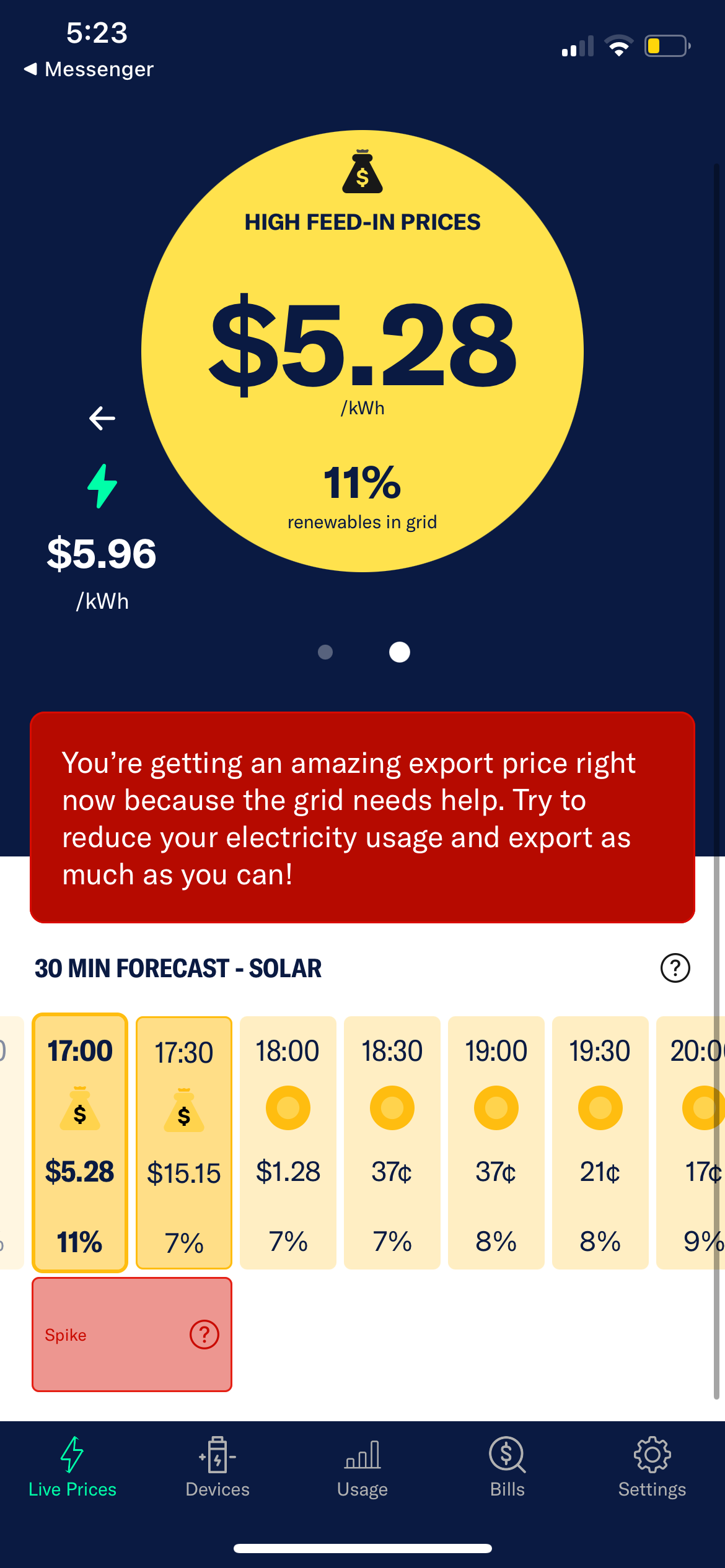
Wholesale electricity prices can spike to $19/kWh during extreme events. Small batteries have little capacity to export when it matters. Large batteries mean serious potential income. Exporting 10 kWh during a spike could earn $190 in one event.

05

Everyday arbitrage.

Even on normal days, power is cheaper off-peak and expensive in the evening. Large batteries let you charge during low-cost times and discharge when prices rise — daily savings without changing your lifestyle.

06

Avoid negative wholesale prices.

If you're with Amber Electric or another wholesale pass-through retailer, your solar exports are tied to real-time prices — which can go negative midday. A small battery fills up quickly, forcing exports at a loss. Larger batteries let you store excess instead of paying to export it.

The bottom line

A small battery can't do it all.

Amber Electric app showing a $5.28/kWh feed-in price spike

A single Powerwall (13.5 kWh) just doesn't cut it for:

  • Capturing big solar output from a large system
  • Running a house for 24+ hours through a storm
  • Profiting meaningfully from price spikes

It's a start, but it leaves significant ROI on the table.

With power prices rising, solar feed-in rates falling, and energy volatility increasing — a large battery gives you control, security, and financial upside. Think of your battery as your energy bank. The more it can store, the more value you'll unlock.

Better Life Batteries offers a 60 kWh second-life EV pack at a similar price point to a single Powerwall — with exceptional capacity, a certified health report, and a sustainable alternative to new-build retail battery options.


Sam Hamilton-Smith, founder of Better Life Batteries Sam · Mt Crosby workshop
MDatSc · CPEng · RPEQ · MIEAust

Sam Hamilton-Smith — Director

Sam is a chartered and registered electrical engineer with over 15 years' experience delivering electrical assets for Queensland.

Ready to size up?

See what's on the bench right now.

Each pack is individually assessed, health-reported and ready for installation. When they go, they go.